
Design-build remodeling brings architectural planning, construction and interior design into one coordinated project. At Cynthia Bennett & Associates, those disciplines work together to connect the plan for your home with the details you will use every day.
The value of that approach depends on how the work is organized. Before starting, clarify the scope, responsibilities, decisions and communication arrangements for your own project. A shared team supports coordination, but it does not make every cost or condition predictable.
Start with the home and the way you use it
Explain what is working, what needs to change and what you want to retain. Bring your priorities, timing constraints and budget expectations into the initial conversation. In a kitchen or bathroom, discuss daily routines alongside the appearance you want. For a larger remodel, consider how the rooms relate and whether the proposed changes support the rest of the house.
Develop the layout and interior details together
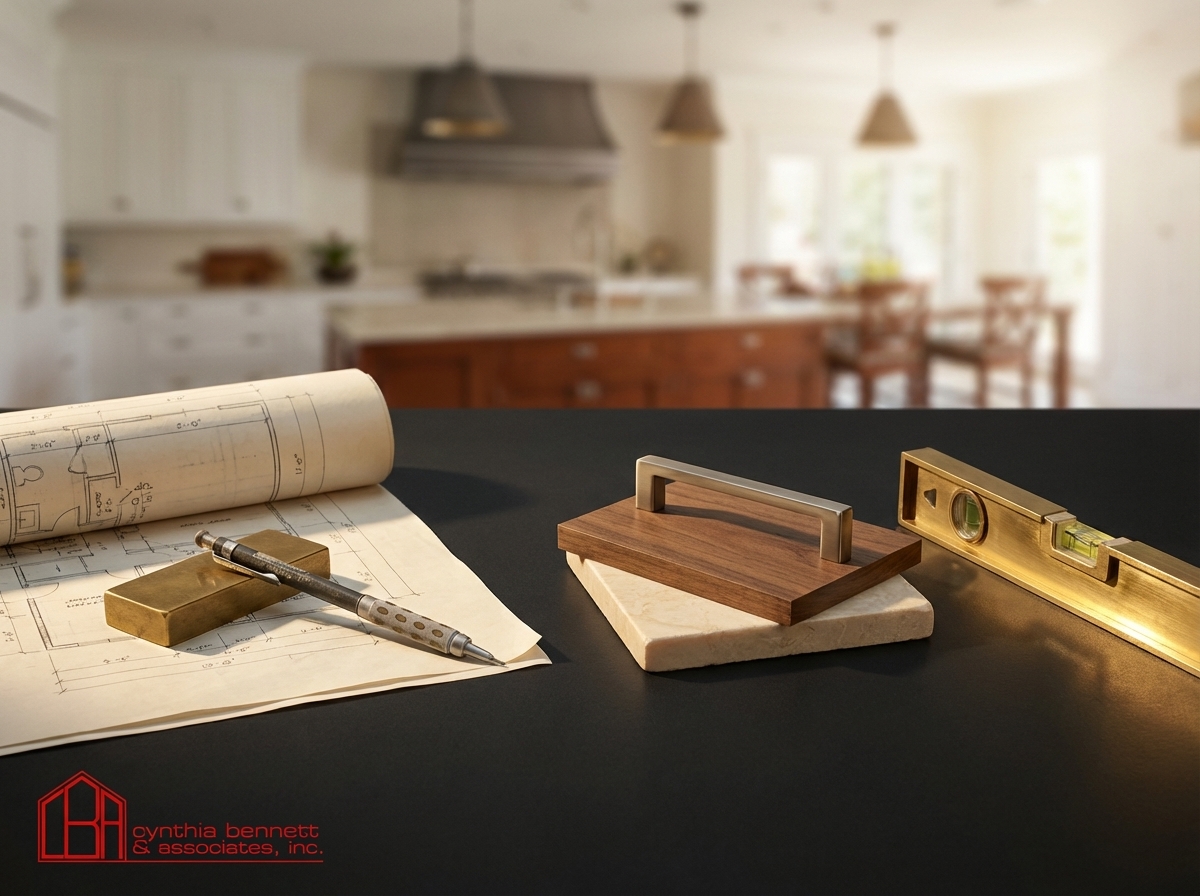
Walls, openings and room proportions influence cabinetry, lighting, furniture and finishes. Those interior choices can also affect the plan. Reviewing them together gives the team a shared basis for discussing the design before work proceeds. Our guide to coordinating architecture and interior design explains the relationship in more detail.
Clarify responsibilities and communication
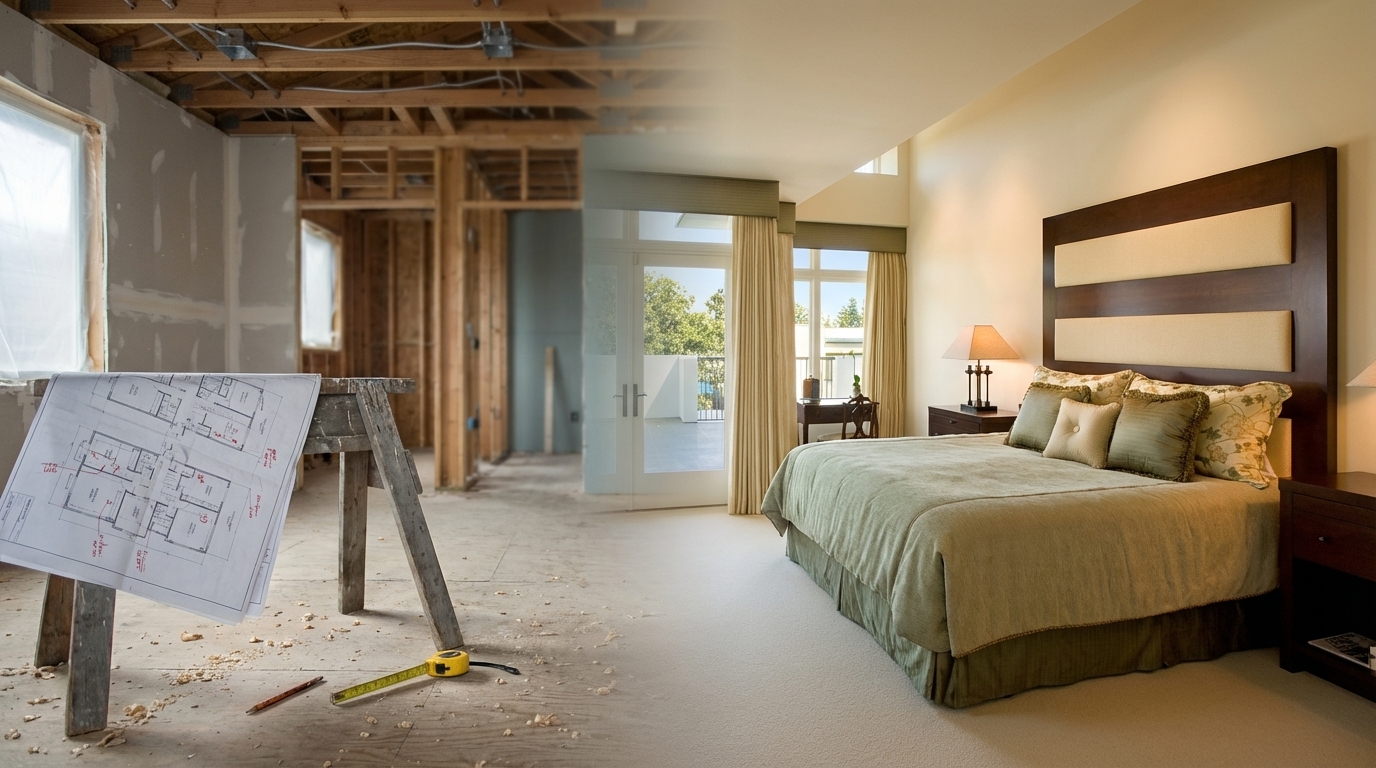
Ask who will be your main contact and who handles the different parts of the project. You may work with several specialists within one firm. Agree on how questions, drawings and approvals will be shared, and who in your household will provide decisions. Read who handles what on a design-build project for questions to bring to that discussion.
Review scope, budget and schedule as connected decisions
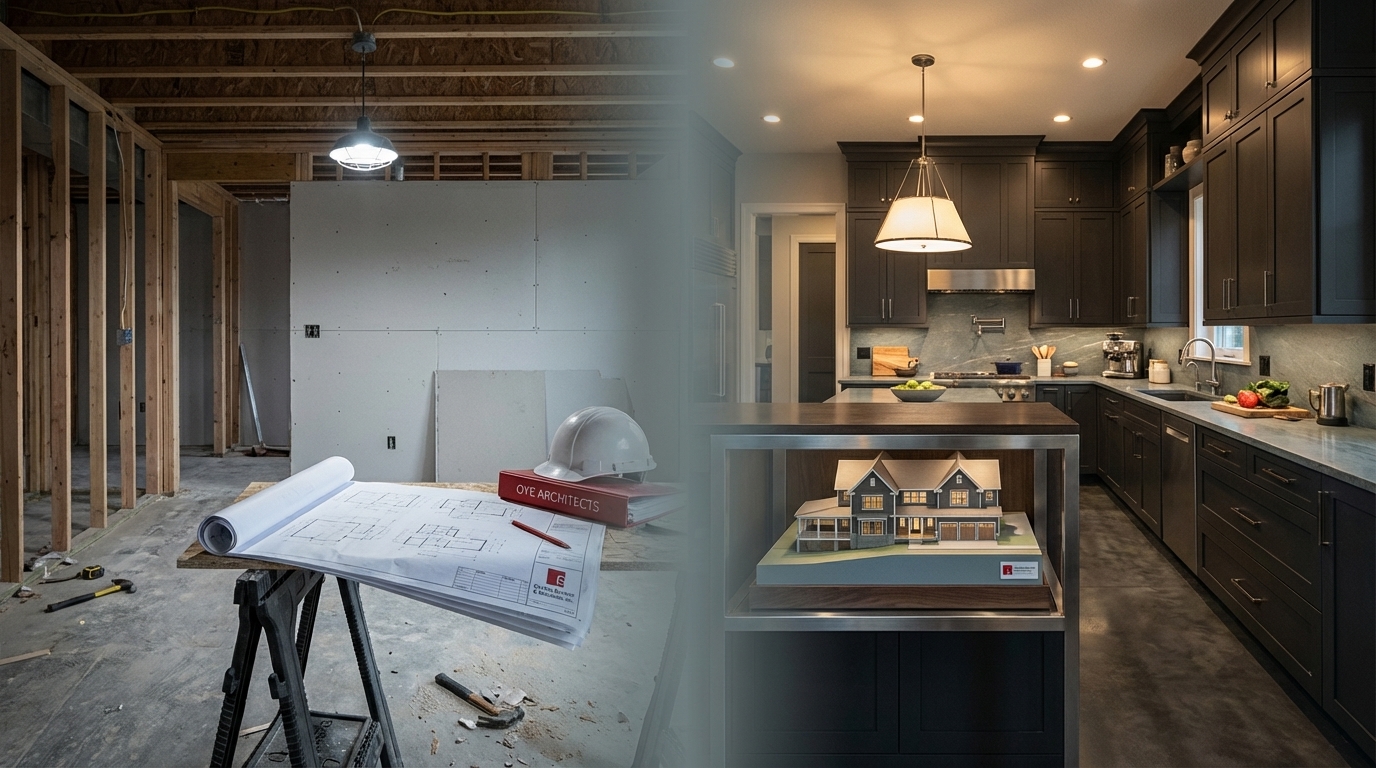
Ask what the proposal includes, what remains undecided and which assumptions affect the estimate or sequence of work. A material change can also affect installation details and timing. Confirm how those implications will be reviewed before you approve a change. The arrangements should be documented for your project rather than inferred from a general description of design-build.
Keep design decisions visible during construction
Use the agreed process to record selections, questions and changes. If work reveals an unexpected condition, ask what has been confirmed, what needs assessment and how the proposed response affects the scope. Coordination remains necessary throughout construction, including when the design needs to be reconsidered.
Review the finished work and remaining items
Discuss how completion will be reviewed, which open items need follow-up and what information you will receive about the finished work. Bring questions about the design and its use to that review. Our remodel completion checklist provides a starting point.
Discuss the approach for your home
Explore our completed project case studies to see CBA’s work, then contact our South Pasadena team to discuss your priorities. The next step is to understand your home and establish what your particular project requires.