
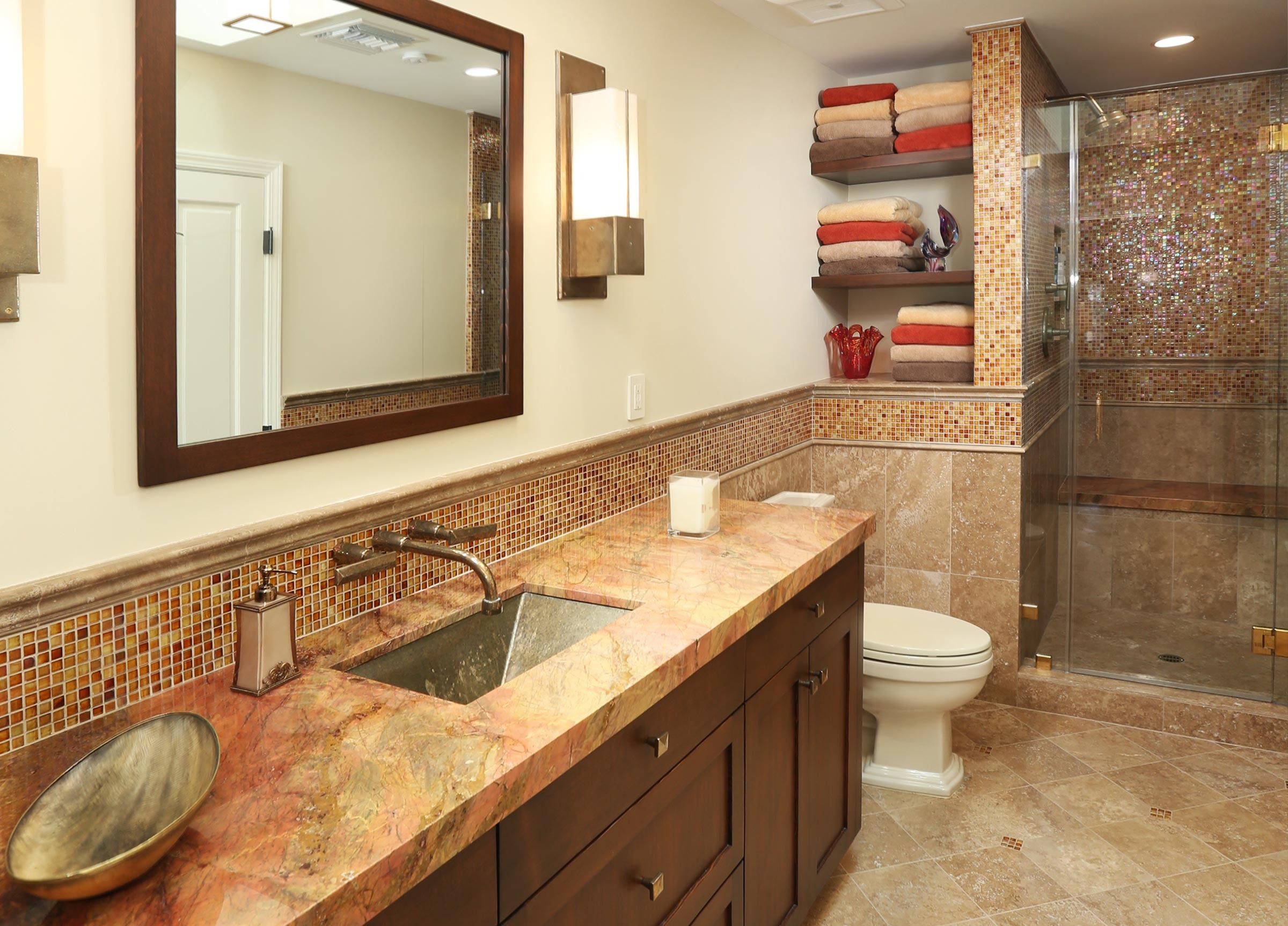
California’s Contractors State License Board lets anyone look up a contractor’s license online in a minute, yet many homeowners hire a bathroom remodel company without ever checking.
How do you choose a bathroom remodel company? First decide what kind of company fits your project: a design-build firm, a general contractor, a bath specialist or a handyman. Then check the license, ask to see bathrooms like yours, find out who designs and who builds, get a ballpark budget early, and understand how changes and payments work. For older homes, choose a team that knows what’s usually behind the walls.
The bathroom is small, but it’s one of the most technical rooms in the house: water, waterproofing, ventilation, electrical and tile all meet in a few square feet. The company you choose decides whether it’s done once and done right.
The four kinds of bathroom remodel companies
| Type of company | What they do | Best for | Watch for |
|---|---|---|---|
| Design-build firm | Designs, prices and builds under one contract | Full remodels, older homes, layout changes | Make sure they include design you’ll actually like |
| General contractor | Builds from drawings you bring | Projects already designed by an architect or designer | You coordinate between designer and builder |
| Bath specialist or franchise | Quick tub or shower replacements, often acrylic systems | A fast refresh in the same layout | Limited materials, rarely suited to period homes |
| Handyman | Small repairs and cosmetic updates | Fixtures, paint, small fixes | Licensing limits on larger jobs |
None of these is wrong. The right choice depends on how much is changing. A new faucet and mirror is a handyman job. A primary bath that moves the shower and adds storage is a design-build project.
Check the license first
What to look up
Every contractor doing work of any size in California should hold a license from the Contractors State License Board. Look up the company on the board’s website, confirm the license is active, check that the name matches the company you’re talking to, and look at the classification. A general building license covers most remodels.
What else to ask for
Ask about insurance, including workers’ compensation, and who pulls the permits. A company that suggests skipping permits to save time is a company to skip.
Ask to see bathrooms like yours
Older homes are a specialty
A 1920s bathroom with original tile and cast-iron drains is a different job from a bathroom in a new house. Ask to see before-and-after photos of bathrooms in homes like yours, and ask what they kept, what they replaced and why. You can see examples in our before-and-after gallery.
Ask what went wrong
Every experienced team has a story about something they found behind a wall. How they describe it, and how they handled it with the client, tells you how they’ll handle surprises in your house.
Who designs, who builds, who manages
One team or several
The clearest setup is one company that designs the bathroom, prices it and builds it. When design and construction are separate, a problem found during demolition has to travel between two companies, and you end up in the middle.
Your point of contact
Ask who visits the site, how often, and who you call when something comes up. In a bathroom remodel, decisions about tile layout, niche heights and fixture positions come up quickly. Having one person who knows the whole plan keeps them small.
Budget, changes and payments
A ballpark before design
Ask for a ballpark range early, before the design is finished. Online cost figures rarely match a real older bathroom, because what’s behind the walls and the materials you choose move the budget more than square footage.
How changes are handled
Ask how a change is priced and approved before the work is done, and get it in writing. Clear change orders prevent most disputes.
Payment schedule
Payments tied to progress, rather than large sums up front, protect you and keep the project moving. At Cynthia Bennett & Associates, clients make weekly progress payments during construction.
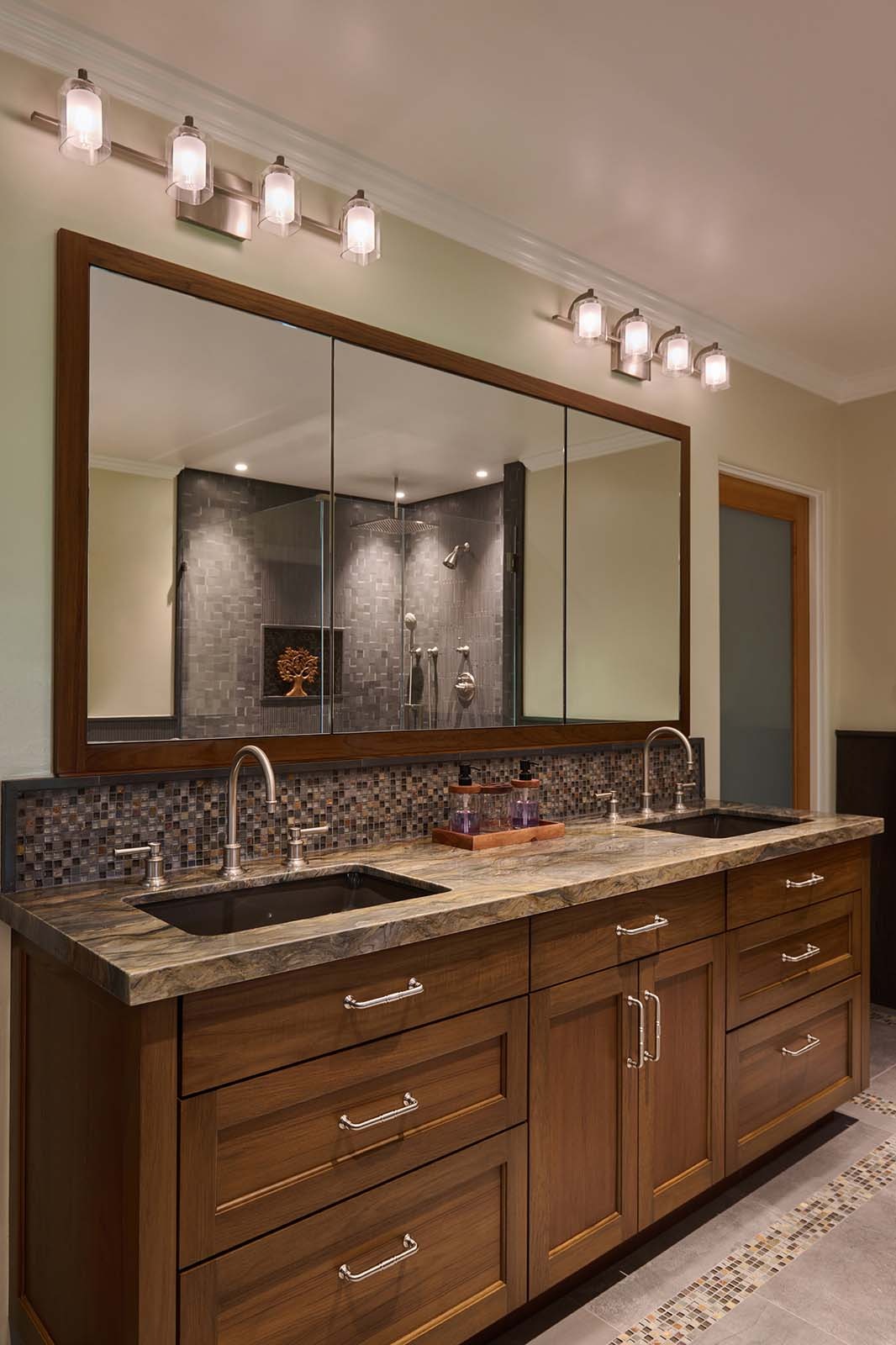
Questions to ask every bathroom remodel company
Bring the same list to every meeting so the answers are easy to compare:
- What license do you hold, and can I see your insurance?
- Who designs the bathroom, and who builds it?
- Can you show me bathrooms in homes like mine?
- How do you handle what’s found behind the walls?
- When will I see a ballpark budget?
- How are changes approved and priced?
- Who will I talk to every week?
What a good company’s process looks like
Before construction
A well-run bathroom remodel starts with a visit to your home: how you use the room, what frustrates you, what you’d like to keep. Then come measurements, a layout and often 3D renderings, so you can see the vanity, shower and storage before anything is ordered. Selections follow: tile, stone, fixtures, lighting and hardware, ideally chosen with a designer beside you so they suit the house and each other.
During construction
Expect protection for floors and nearby rooms, a clear plan for where you’ll bathe while the work is done, and regular updates. Plumbing and electrical work is inspected before walls are closed, then waterproofing, tile and fixtures go in. A good company tells you about any decisions a week or two before they’re needed, not on the day.
After the work
The walkthrough at the end should include how to care for the new materials and what to do if anything needs attention. Ask how long the company stands behind its work. Cynthia Bennett & Associates offers a 10-year workmanship warranty and keeps helping after it ends, for example with manufacturer claims. Our FAQ explains how that works.
Red flags to watch for
Pressure and vague answers
A quote that’s far lower than the others without explanation, a “today only” discount, or vague answers about permits and changes are all warning signs. So is a company that won’t put the scope in writing.
Skipping the details
Waterproofing, ventilation and the condition of the subfloor are where bathroom remodels fail years later. A good company talks about them without being asked.
A tip from our team
Ask each company how they waterproof a shower and what they do about ventilation. It’s a simple question, but the answer shows you who thinks about the parts you’ll never see. In older homes, a quiet fan vented to the outside and a properly waterproofed shower protect not only the new bathroom but the original plaster and woodwork around it.
Making the choice
Choose the team that explains its process clearly, shows you work like yours and gives you a realistic plan before you commit. For a bathroom remodel in an older home, that’s usually a design-build team that can design within the limits of the house and build what it designs.
Cynthia Bennett & Associates has designed and built bathroom remodels in Pasadena, South Pasadena and San Marino since 1981, from powder rooms to primary suites. If you’re comparing companies, we’d be glad to walk through your bathroom with you. Let’s talk about your home.
FAQ
Do I need a licensed contractor for a bathroom remodel in California?
For anything beyond small repairs, yes. Check the license on the Contractors State License Board website and make sure it’s active and matches the company.
Is a design-build firm better than a general contractor for a bathroom?
For a remodel that changes the layout or happens in an older home, often yes, because one team designs, prices and builds. For a project an architect already designed, a general contractor can be the right fit.
How do I compare bathroom remodel quotes?
Compare what each one includes, not only the total: design, permits, demolition, plumbing and electrical work, waterproofing, fixtures and an allowance for surprises behind the walls.